
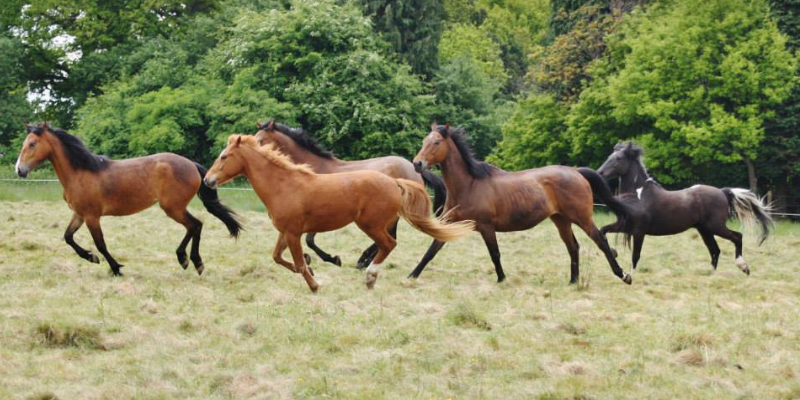
Kingsmead Equestrian Centre, aka, Kingsmead Horses, is a family run business. Together with their team, they take care of 43 horses and provide equestrian services 7 days a week, practically 365 days a year. They also run a charity, Friends of Kingsmead Horses, where they use horse riding and related activities to promote and facilitate education and therapy in the interests of social welfare.
Vision and challenges
The family has an ambitious vision for Kingsmead Horses. It includes creating a sensory garden and a pavilion, where people can enjoy nature for nature’s sake, in a therapeutic way.
Running the centre with a mix of part-time, full-time and week-end-only staff, plus volunteers, is a daunting challenge and can be chaotic. It is particularly difficult to ensure continuity of ‘how we do things here.’ As is clear and transparent communication so EVERYONE knows, gets and fully understands what they need to know, to operate effectively.
It was clear when I first met Fiona, that she had a deep love for horses and people and was fully committed to the KEC vision. However, the responsibility weighed heavily on her, and she admitted to feeling overwhelmed, ‘carrying the burden’ and worried about burnout or failure.
A Growing Business
The problems Fiona described are typical of a growing business at the stage where it would benefit from a more professional management approach. Businesses at this stage often plateau. It takes an open-minded business owner(s) and willingness to do the work to break through this ceiling.
Getting Unstuck
I started by asking Fiona ‘who is responsible for what’ at KEC. It soon became apparent that she held the ultimate responsibility. She is also seen as the ultimate authority. When she is in the yard the staff refer all questions, queries and decisions to her, inadvertently creating a bottleneck.
Next, I sketched out and explained the five key roles in every business. ‘There is more to it than this’, I said, ’but for now, who would be the best person to take responsibility and accountability for each of these roles?’
That was about as much as we could get done in the 15 minutes allocated in a network meeting.
Fiona’s follow-up email confirmed that our conversation was right on the mark:
‘Thank you for spending time with me at the meeting; even those 15 minutes have given me clarity and this has had a big impact back on the centre.’
Digging deeper
Six weeks later when Fiona and I met again, it was at Kingsmead Horses. I was introduced to the other members of the family team. We delved deeper into their challenges: people problems, communication difficulties, lack of accountability, constant firefighting.
As we talked, a handful of ideas that could be adopted and implemented immediately, became apparent:
- Use the handbook. There is a handbook of ‘what we are about and how we do things around here.’ It’s available, make it more accessible, refer to it constantly as a way of on-boarding new staff, training and cascading the ‘KEC way’ to all staff.
- Clearly communicate standards and expectations. For each task, ask ‘What does good look like?’ Agree the desired level of performance. Find simple ways to educate staff. Show them repeatedly. For example, a photo, or simple video that shows what a good horses’ bed looks like and how to make one. With this in place, when expectations are not met, there is a clear gap that both parties can agree on and that can be addressed.
- Be clear about communication boundaries. It causes confusion and frustration when communication boundaries between professional and family roles are crossed. For example, ‘I needed the boss’s direction; I got a parent’s concern.’ For this I suggested that family members take a moment to assess which ‘hat’ they are wearing when they communicate. This should help to keep such boundaries clear and over time it will become automatic.
Create an empowering culture
In September, Fiona attended my Vision and Strategy Workshop where we worked on core values, core focus, marketing and plans for the future.
Fiona says, ‘The core values was the most important thing for me. I’m going to look at how I’m going to take those into the business. I have them, but I don’t think everyone I work with has them. And that’s probably a big mistake that we need to address.’
Being ‘Kingsmead’
Fiona is a wise woman, visionary and leader and KEC is going from strength to strength.
‘Being Kingsmead’ is on the agenda. It means having a can do attitude and a problem solving approach.
It emanates from the yard! You can feel it. Why not go and experience it for yourself?
Are YOU creating an empowering culture in your business?
If you’re a growing business and things are chaotic and challenging, get in touch. Let’s have a conversation and see if what I do can be of value to you and your business. Book an appointment directly in my online diary.